Written by TechDev Academy Team · July 16, 2026 · 10 min read
Most people have a vague idea of what a Silicon Valley entrepreneurship bootcamp looks like. Hoodies. Whiteboards. Someone saying “disrupt” a lot.
The reality is different — and significantly more interesting.
This is an inside look at what actually happened over three days at TechDev Academy’s Entrepreneurship Bootcamp and Competition, July 14-16, 2026, at Alpine Hills Club in Portola Valley, California. Real students. Real mentors. The co-founder of Tesla walking into the room unannounced. Real results.
📌 Quick Answer
A Silicon Valley entrepreneurship bootcamp is an intensive program where students build a startup concept from scratch, receive mentorship from real founders and investors, and compete in a live pitch competition. Over three days, students go from idea to validated business model to polished pitch — with Silicon Valley professionals guiding every stage of the process. At TechDev Academy’s 2026 bootcamp, students also got an unexpected 30-minute Q&A with Marc Tarpenning, co-founder of Tesla.
In This Article
- What Is a Silicon Valley Entrepreneurship Bootcamp?
- Who Attended This Year’s Bootcamp?
- What Happened on Day 1?
- What Happened on Day 2?
- What Happened on Day 3?
- Who Were the Mentors — and Who Walked In Unexpectedly?
- Who Won the Pitch Competition?
- What Do Students Actually Walk Away With?
- How Does It Help With College Applications?
- People Also Ask
What Is a Silicon Valley Entrepreneurship Bootcamp?
A Silicon Valley entrepreneurship bootcamp is not a class. It is not a seminar. And it is not three days of listening to someone talk about business theory.
In contrast, it is an immersive experience where students learn by doing — building real startup concepts, validating them with real frameworks, and presenting them to real judges. Moreover, the Silicon Valley location is not incidental. It is the point.
| Regular Entrepreneurship Class | Silicon Valley Entrepreneurship Bootcamp |
|---|---|
| Learn about business concepts | Build an actual startup concept |
| Teacher leads, students listen | Founders mentor, students build |
| Theory-based assessment | Live pitch competition with real judges |
| Generic advice | Feedback from people who have done it |
| Certificate at end of semester | Certificate after 3 intensive days |
The density of entrepreneurial talent, investor networks, and startup culture in Silicon Valley creates a learning environment that cannot be replicated anywhere else. When students sit across from a founder who built the technology behind mobile payments — or a YCombinator graduate who built a healthcare startup — the advice lands differently. More specific. More honest. More useful.
And sometimes, the co-founder of Tesla walks in.
Who Attended This Year’s Bootcamp?
Students came from across the United States and internationally. One of the highlights of this year’s program was welcoming a group of young entrepreneurs from China. Their curiosity, creativity, and collaborative energy made the experience richer for every student in the room.
Students ranged from 13 to 18 years old. Some arrived with a clear business idea. Others arrived with nothing but curiosity. By Day 3, however, both groups were standing on the same stage.
No prior business experience is required to attend. What matters is a genuine willingness to show up, do the work, and be honest about what you do not know yet.
What Happened on Day 1?
How Do Students Find a Startup Idea in One Day?
Day 1 has one job: replace the myth that you need a perfect idea with the reality that you need a real problem.
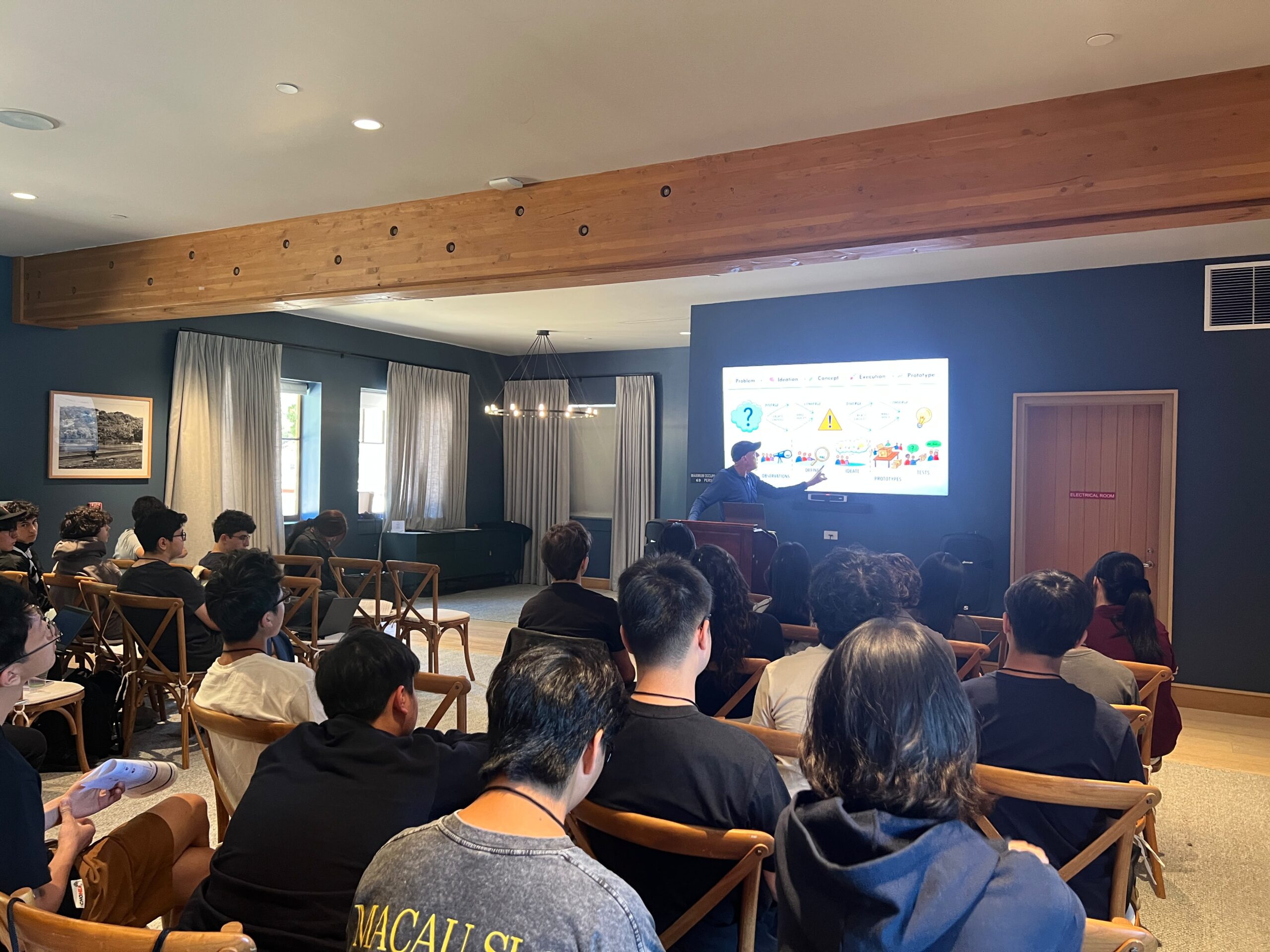
The day opens with keynote sessions from Silicon Valley founders. These are not polished corporate presentations. Instead, they are honest conversations about how real companies get built — what goes wrong in year one, what founders wish they had known, and what the difference actually looks like between a startup that survives and one that does not.
After the keynotes, students move into workshops. Using structured frameworks, they identify real problems and test whether those problems are significant enough that someone would pay for a better solution. As a result, by evening every team has a direction worth pursuing.
What students accomplish on Day 1:
- ✓ Work through problem identification frameworks with mentor guidance
- ✓ Form teams with complementary skills and perspectives
- ✓ Complete initial customer discovery conversations
- ✓ Draft a problem statement and initial solution concept
- ✓ Receive first-round mentor feedback before the day ends
The day closes with a networking session. In practice, however, these conversations keep going long after the official schedule ends — because when you put ambitious people from different countries in the same room and give them something real to work on, the energy does not just switch off.
What Happened on Day 2?
How Do Students Build a Business Model in 24 Hours?
If Day 1 is about finding the problem, Day 2 is about building the business.
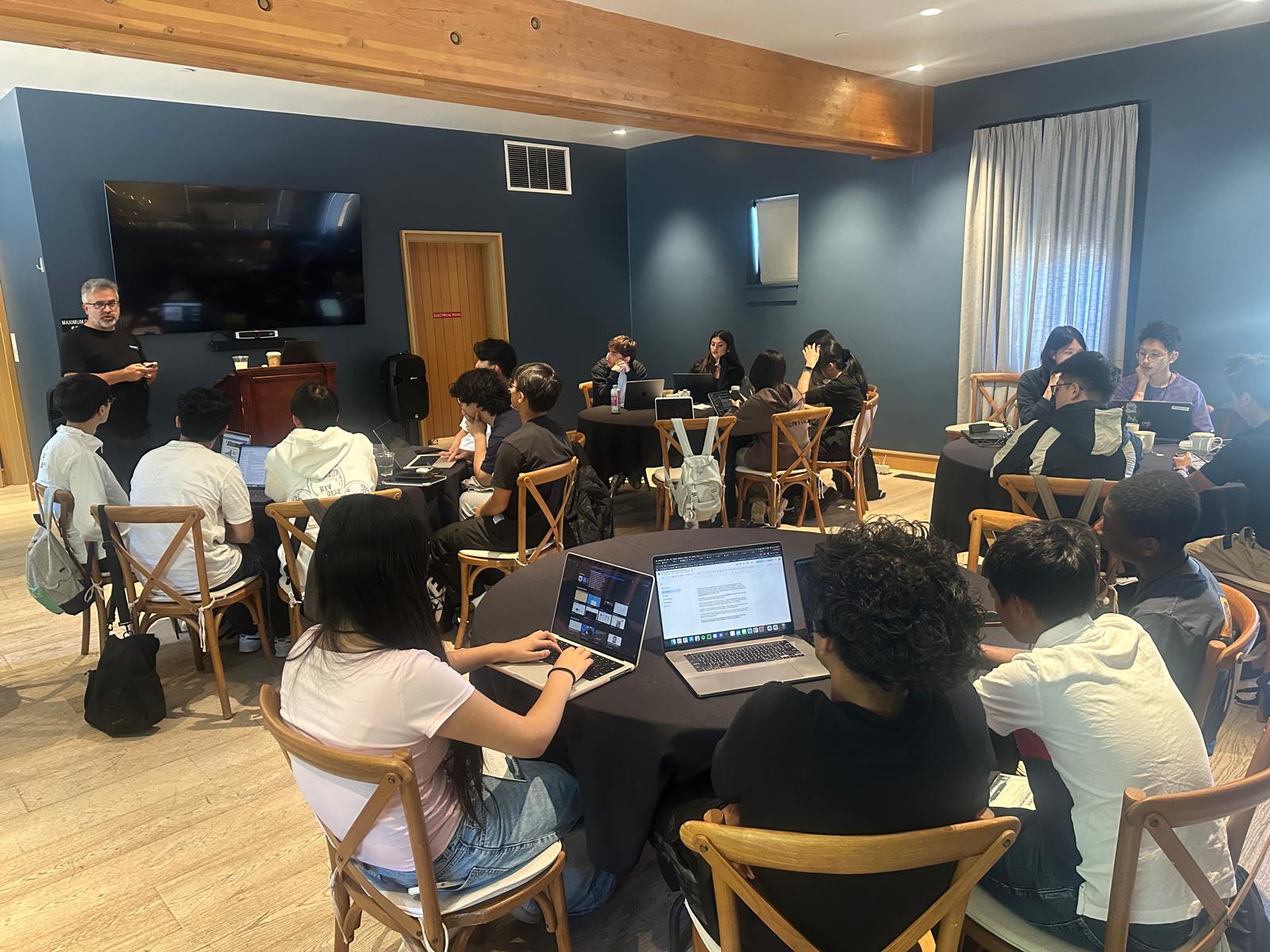
Morning workshops focus on the fundamentals that judges evaluate most heavily: market sizing, competitive analysis, revenue modeling, and MVP design. Importantly, students do not just learn these concepts — they apply them to their own idea in real time, with mentors in the room to challenge vague thinking immediately.
| Workshop | What Students Build |
|---|---|
| Market Sizing | TAM/SAM/SOM with cited sources |
| Competitive Analysis | Competitor matrix with clear differentiation |
| Revenue Modeling | Specific price point and year-one projection |
| MVP Design | Minimum viable version of the solution |
| Pitch Structure | 8-slide deck framework |
In the afternoon, the focus shifts to one-on-one and small group mentorship sessions — consistently the part of the bootcamp students describe as most valuable. Each team sits with mentors who have built real companies. Consequently, the questions they ask are the same ones judges will ask: Why would someone pay for this? What happens if a bigger company copies it? Why are you the right team to build this?
By the time evening pitch practice begins, students have already been through the toughest feedback session of the program. As a result, the formal practice feels almost manageable by comparison.
💡 What makes this different from a classroom: In a classroom, feedback comes after the assignment is due. At the bootcamp, however, feedback comes while there is still time to act on it. That is the difference between learning about entrepreneurship and actually doing it.
What Happened on Day 3?
How Does the Pitch Competition Work?
Day 3 belongs to the students.
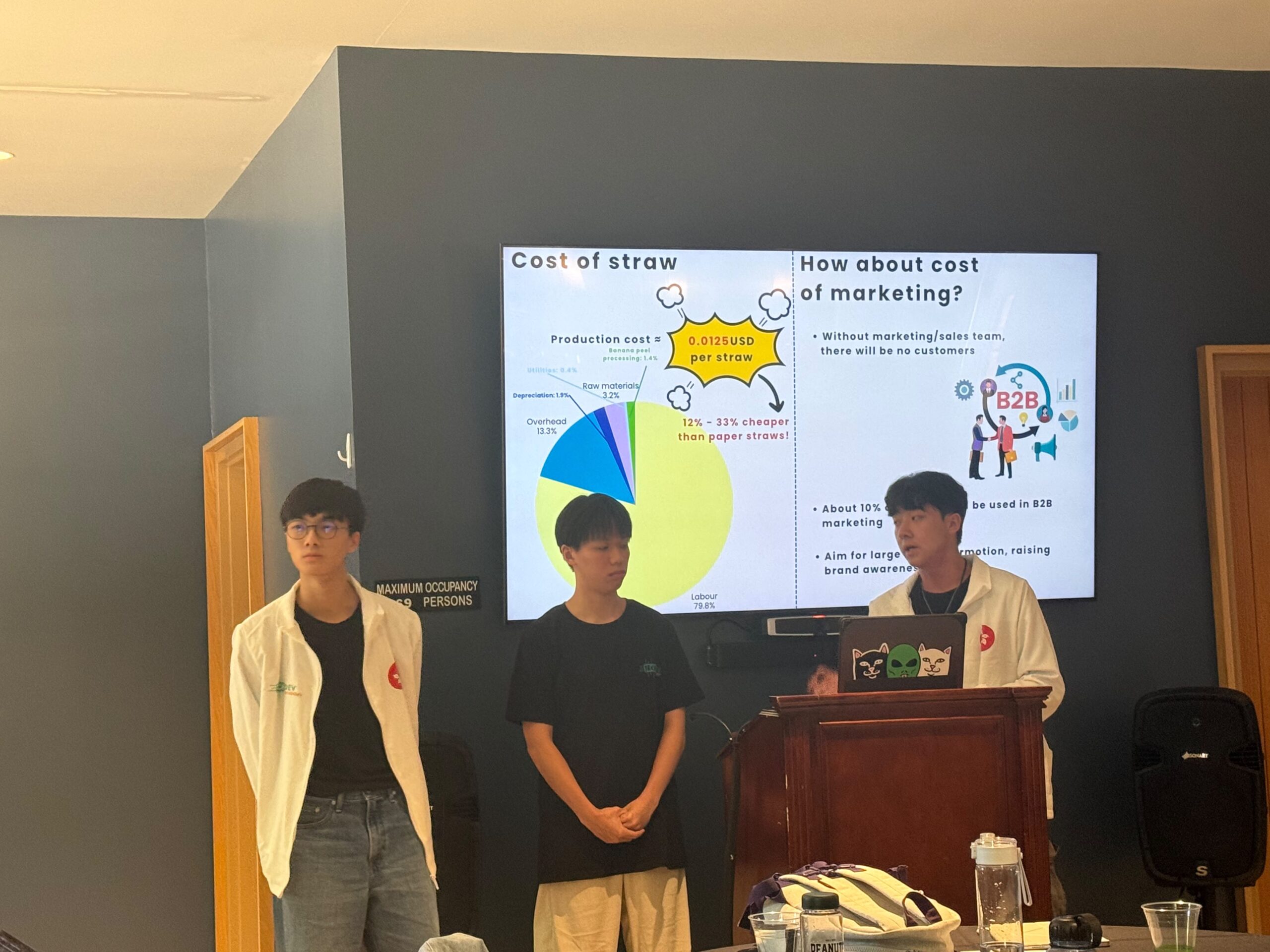
After two days of building, validating, and iterating, every team takes the stage. Each team has 10 minutes to pitch and 5 minutes to answer questions from the panel of judges — the same format used in real investor pitch competitions.
What judges evaluate:
- ✓ Problem clarity — is it specific, real, and significant?
- ✓ Solution quality — does it solve the problem better than alternatives?
- ✓ Market understanding — do they know who their customer is and why they pay?
- ✓ Business viability — could this actually generate revenue?
- ✓ Presentation quality — is the pitch clear, confident, and compelling under pressure?
The energy in the room on Day 3 is something that cannot be manufactured. Students who arrived two days earlier not knowing their teammates are now standing in front of Silicon Valley professionals, defending ideas they built themselves. Moreover, they are doing it with the kind of confidence that only comes from having done the actual work.
Who Were the Mentors — and Who Walked In Unexpectedly?
Marc Tarpenning, Co-Founder of Tesla
Nobody scheduled this. Nobody could have.
Marc Tarpenning — co-founder of Tesla — is a member of Alpine Hills Club, the private venue where the bootcamp took place. He stopped by, met the students, and what followed was a 30-minute Q&A session that nobody will forget.
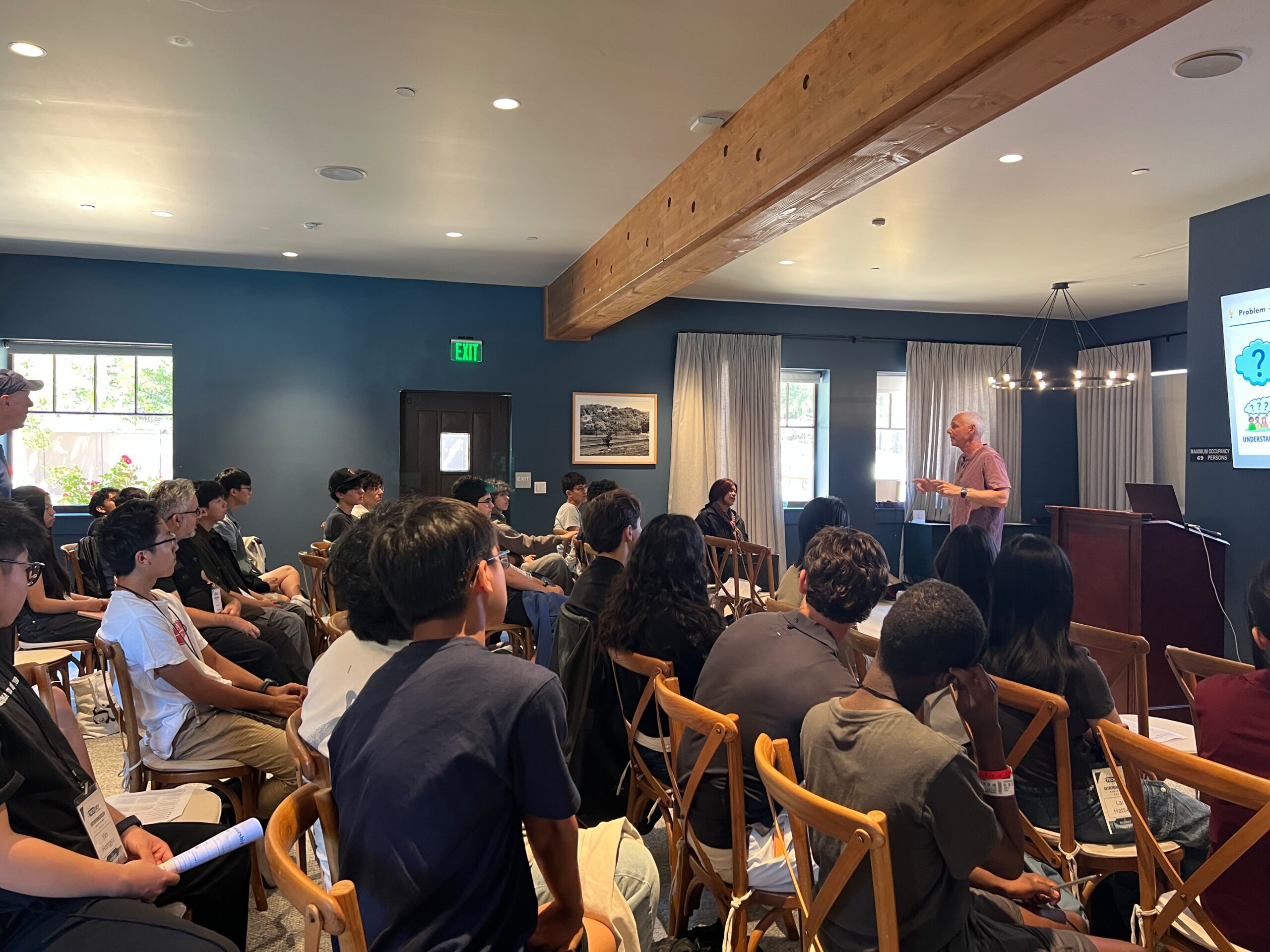
Marc did not come to deliver a keynote. Instead, he came to have a real conversation. Students asked him about the early days of Tesla, about building something most people thought was impossible, about failure, and about what he would do differently. He answered every question honestly.
This is what Silicon Valley actually looks like. The co-founder of one of the most consequential companies in history walks into the room — not because it was scheduled, but because ambitious young people building real things tend to attract exactly that kind of person.
The Mentor Team
Kerry Brown — Co-founder of VIVOtech and creator of the mobile NFC contactless payment ecosystem. As founder of BayPay Forum and Paykademy, Kerry built infrastructure that billions of people use every day.
Murat Baday, PhD — Stanford scientist and serial entrepreneur. Through his work, Murat showed students what it looks like to take cutting-edge research out of the lab and build a company around it.
Mohammed Kaleel, MD, MSc — YCombinator founder and Stanford-trained physician. In his sessions, Mohammed brought the perspective of someone building at the intersection of healthcare and technology — one of the hardest spaces in the startup world.
Nahid Fattahi — Human behavior and mental health expert. Uniquely, Nahid addressed something most entrepreneurship programs skip entirely: the emotional intelligence required to lead a team and make decisions under pressure.
Jagriti Jaiswal — Strategy and transformation consultant. Throughout her sessions, Jagriti pushed students to think about their ideas not just as products but as systems — and to ask harder questions about why their solution would actually work.
Daniel Chatelain — Serial entrepreneur and fintech consultant. With his real-world experience, Daniel brought the discipline that comes from having built businesses that survived contact with real customers.
Promita Chakraborty, PhD — AI and data science specialist and VC Fellow. In particular, Promita helped students understand how AI is reshaping what is possible for startup founders in 2026 — and how to think about it as a tool rather than a shortcut.
John Cabri — Rounded out the mentor team with expertise that helped students sharpen their thinking in the final push toward the pitch competition.
Eight mentors. Eight different perspectives. Zero generic advice.
What Do Students Actually Walk Away With?
Tangible outcomes every participant receives:
✓ A completed startup concept with validated problem, business model, and pitch deck
✓ Certificate of completion from TechDev Academy’s Silicon Valley Bootcamp
✓ Direct feedback from Silicon Valley founders and investors on their specific idea
✓ A professional network that includes mentors, peers, and industry connections
✓ Real pitch competition experience in a high-stakes environment
How Does a Silicon Valley Entrepreneurship Bootcamp Help With College Applications?
For many students, these three days are more than a program. They are, in fact, a meaningful differentiator in a college application that now tells a different story.
Admissions officers at competitive universities are not just looking for strong grades. Instead, they are looking for evidence of initiative, independent thinking, and the ability to create something real under pressure.
A student who built a startup concept from scratch, pitched it to Silicon Valley founders, and had an unplanned conversation with the co-founder of Tesla — that student has a story worth telling.
What bootcamp participants can add to their college applications:
- ✓ TechDev Academy Silicon Valley Bootcamp certificate of completion
- ✓ Real entrepreneurship experience with specific, quantifiable outcomes
- ✓ Compelling material for college essays about challenge, growth, and initiative
- ✓ Professional references from Silicon Valley mentors
- ✓ Evidence of cross-cultural collaboration and leadership under pressure
For students who want to go further, TechDev Academy’s Elite College Prep Program helps students present this experience — and everything else they have built — in the most compelling way possible for top university applications.
People Also Ask
What is a Silicon Valley entrepreneurship bootcamp?
A Silicon Valley entrepreneurship bootcamp is an intensive program where students build startup concepts from scratch, receive mentorship from real founders and investors, and compete in live pitch competitions. Moreover, the Silicon Valley location provides access to a concentration of entrepreneurial talent and startup culture that cannot be replicated anywhere else.
Who can attend TechDev Academy’s Entrepreneurship Bootcamp?
The bootcamp is open to high school students aged 13-18, including recent graduates and early college students. Students can participate individually or in teams. Importantly, no prior business experience is required.
Do students need a startup idea before attending?
No. In fact, Day 1 is specifically structured to help students who arrive without a finished idea generate and validate a viable startup concept from scratch.
How does the bootcamp help with college applications?
Every participant receives a certificate of completion. Additionally, the experience generates strong material for college essays — particularly Common App prompts about challenges, growth, and initiative. Students who combine bootcamp experience with TechDev Academy’s Elite College Prep Program build the strongest possible applications to competitive universities.
What do students build at the bootcamp?
Students build a complete startup concept including a validated problem statement, customer discovery findings, market size analysis, competitive landscape, revenue model, and pitch deck. Furthermore, all of this is presented in a live pitch competition on Day 3.
When is the next TechDev Academy bootcamp?
Stay tuned for announcements about upcoming programs. In the meantime, explore TechDev Academy’s online entrepreneurship programs and mentorship program — available year-round.
🚀 Want to Be Part of the Next Program?
TechDev Academy gives high school students the entrepreneurship experience, Silicon Valley mentorship, and college prep support that top universities and future employers actually look for.
👉 Explore Our Elite College Prep Program
👉 Discover Our Mentorship Program
👉 Join Our Online Entrepreneur Bootcamp
Related Articles:
-
- 📄 What Happens at an Entrepreneurship Bootcamp for Students
- 📄 How to Prepare for a Startup Competition in High School
- 📄 How to Build a Startup Idea From Scratch in a Weekend
- 📄 Learning From Failure as a Young Entrepreneur
- 📄 Career Guidance in High School: The Decisions You Make Today Define Tomorrow